When ActivateAI launched in October 2025, its ambition was bold – to make sure the AI revolution taking shape across Northern Ireland wasn’t limited to Belfast or excluded under-represented groups across the region.
Activate AI is a pioneering pilot programme created by AwakenHub and Tech NI Advocates, aimed at boosting both AI adoption and productivity among under-represented founders and early-stage or scaling tech businesses in Northern Ireland. The initiative is part of the Regional Tech Booster programme, run by the UKTCG and funded by the UK Government.
Launched in October, the initiative supports 30 women, ethnic minorities and rural entrepreneurs to take part in a series of masterclasses, peer sessions and a regional showcase designed to build skills, confidence and community. Their approach combines AI-powered tools with hands-on expertise to help businesses understand and embed AI-enabled solutions and build networks, as well as fostering a more inclusive ecosystem.
Northern Ireland is home to more than 1,500 digital and tech businesses, concentrated around Greater Belfast. Despite being a growing tech economy, the nation still faces underlying challenges which include geographic imbalance, gender disparity and limited access to support for founders outside the capital.
In order to further develop the tech ecosystem in Northern Ireland, it’s important to support and develop growth into the counties and rural areas outside of Belfast. On top of that, it’s also vital to focus on supporting women founders to help close the gender gap, as well as encouraging greater uptake amongst ethnic minority founders or business leaders. Closing the regional imbalance, improving AI readiness and increasing diversity in the industry are all key to deliver sustainable and competitive growth for all of Northern Ireland.
ActivateAI has addressed these barriers head-on, setting targets of minimum 50% participation from outside Belfast, 50% women and 20% from underrepresented groups.
Applicants were assessed not just on business readiness but also on their innovation potential and their commitment to learning and contributing to the ecosystem. The response to this new initiative was overwhelming.
From more than 80 applications, 33 founders were selected to take part. When the inaugural cohort came together on 11 December, the programme had already surpassed every target:
- 66% of participants are based outside Belfast, representing Derry, Down, Armagh, Fermanagh and Tyrone
- 53% identified as women, achieving gender parity
- 47% from rural areas across Northern Ireland
Sinead Crowley, co-founder and director of community at Awaken Hub, said: “AI is the most transformative technology of a generation. However, our goal is to ensure that it’s accessible to and safely used by everyone, not just those already succeeding in the tech ecosystem. One of the best uses for AI technology is to use it to help level the playing field for under-represented groups, entrepreneurs and businesses with ambition to increase productivity and scale.”
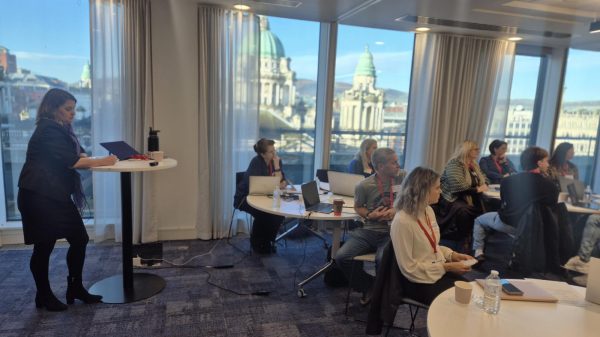
On January 15, over 40 people attended a day long session in Belfast entitled ‘Unlocking Your Productivity with AI’ delivered by Mara Bolis, Fellow, Harvard Kennedy School supported by the AwakenHub Co-founding Team along with Tadhg Hickey, AICC, Kelly Hoey and Martin Spiller. Attendees actively worked on integration of AI systems and tools into the real life work scenarios from Standard Operating Procedures, Sales, Pitching and Strategy.
Feedback quotes from participants:
“This is the lifeline I was looking for and needed.”
“Effectively I feel I can produce a full set of SOP’s for my business relatively easily and consistently.”
“The connections with others in other industries. How AI is being used in other businesses I hope can give us a different perspective on integration into our business practices.”
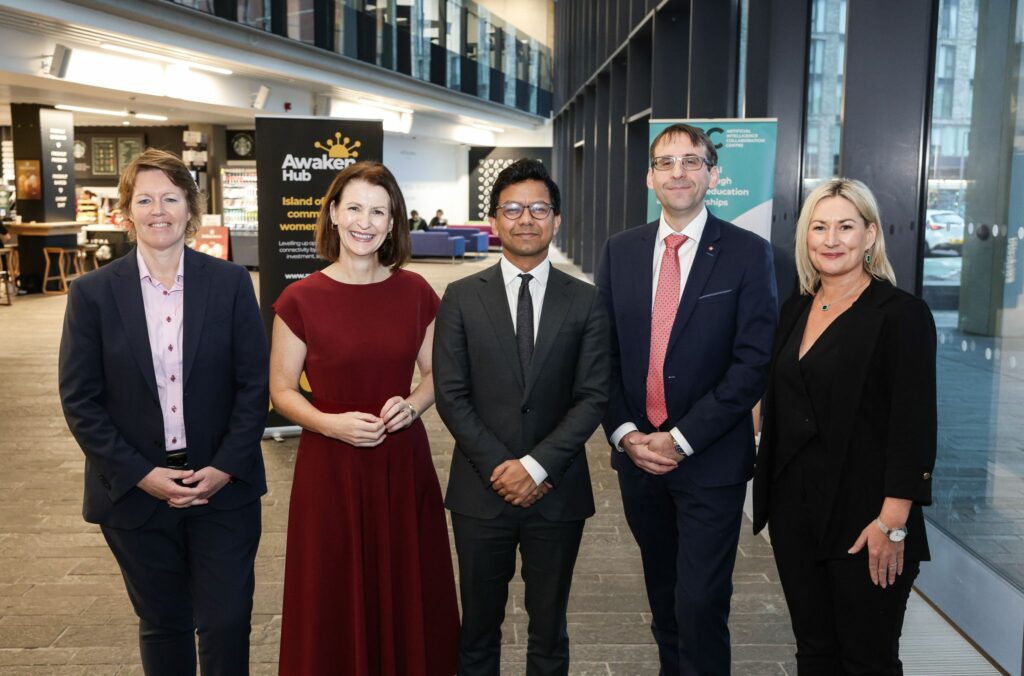
The programme has already generated significant momentum through high-profile events, including hosting UK AI Minister Kanishka Narayan MP for an event in December 2025, in partnership with the Artificial Intelligence Collaboration Centre (AICC), Ulster University, and Queen’s University Belfast at the start of December. This ministerial visit positioned ActivateAI as a flagship initiative within the UK’s broader AI strategy and also showcased the tech economy in Northern Ireland.
Running until March 2026, the programme blends in-person and online learning with peer accountability and access to a thriving support network. The initiative features five key events with both online and in-person formats, guest experts and peer accountability.
But its impact is expected to last much longer and this pilot can be rolled out across the other nations and regions of the UK to ensure that AI growth is accessible to everyone.
ActivateAI has already proven that ambition for inclusion and innovation excellence can thrive side by side. By designing for diversity from day one, the programme has assembled a cohort that reflects Northern Ireland’s entrepreneurial spirit and is poised to turn AI know-how into tangible growth for communities right across the region.